Wednesday, January 14, 2026

Fw: Australia’s New Hate Speech Bill Is Reckless, Contradictory, and Repressive


Plus: The Great Biometric Data Grab.
 ‌ ‌ ‌ ‌ ‌ ‌ ‌ ‌ ‌ ‌ ‌ ‌ ‌ ‌ ‌ ‌ ‌ ‌ ‌ ‌ ‌ ‌ ‌ ‌ ‌ ‌  ‌ ‌ ‌ ‌ ‌ ‌ ‌ ‌ ‌ ‌ ‌ ‌ ‌ ‌ ‌ ‌ ‌ ‌ ‌ ‌ ‌ ‌ ‌ ‌ ‌ ‌ 
logo
A BREAKDOWN
1

From Roblox To The IRS: The Great Biometric Data Grab

Before you can type a single word online, an algorithm is quietly deciding whether your face looks the right age, whether your behavior matches their model, and whether you've earned the right to speak at all. 

What's happening inside one of the world's largest youth platforms is a preview of a broader movement where communication is gated by biometric compliance, private vendors become identity arbiters, and opting out quietly means disappearing. 

Today, we trace how a seemingly reasonable rule reveals a deeper transformation already spreading across gaming, finance, and government services, and why once facial verification becomes normal, it almost never stops at the door where it started.

Become a supporter here.

Then get the post here.

Become a Supporter

REVEALED
1

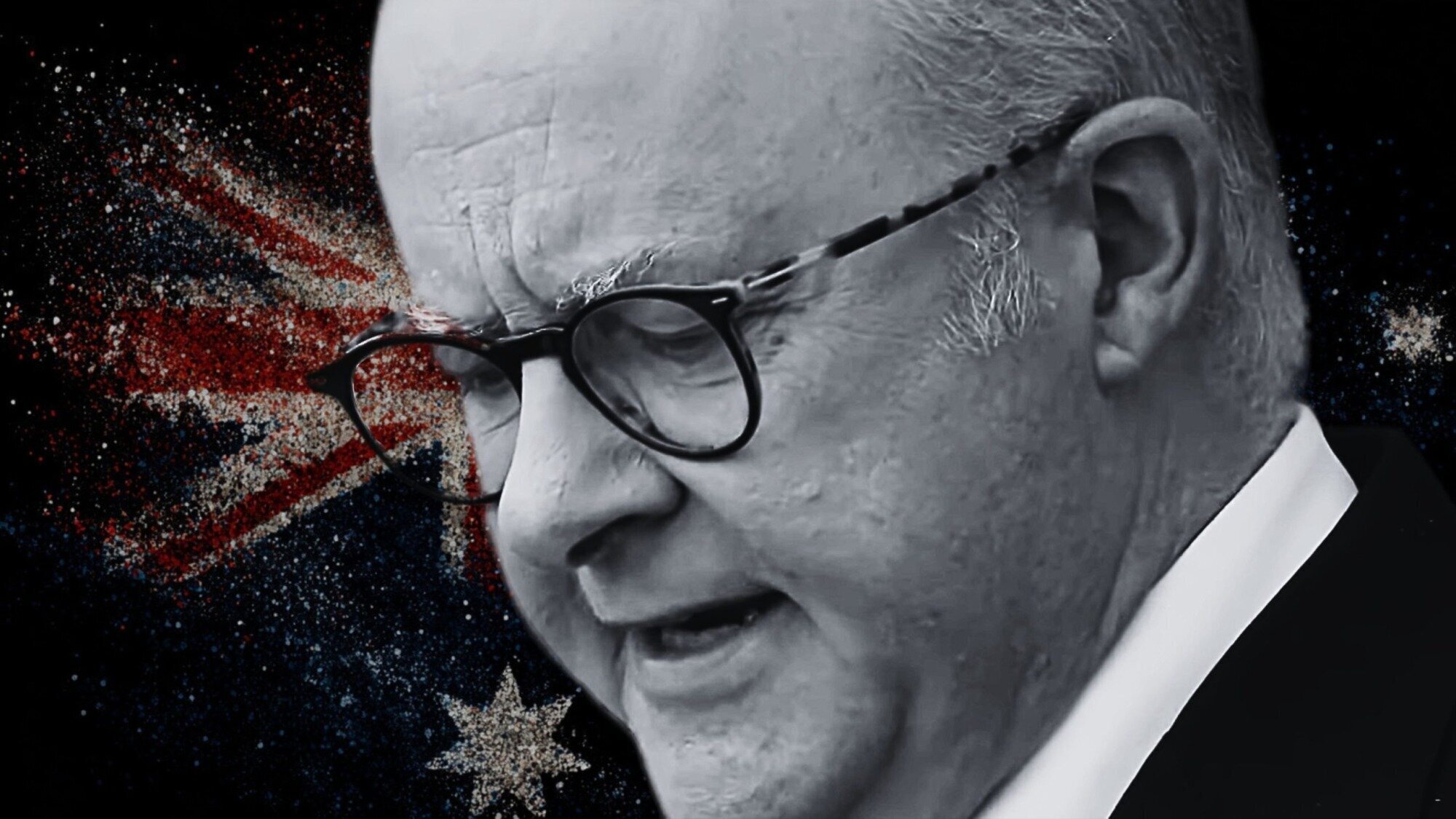
Australia's New Hate Speech Bill Is Reckless, Contradictory, and Repressive

On January 12, Australia's Attorney-General Michelle Rowland stepped to the podium and announced what she called "the toughest hate laws Australia has ever seen."

The government plans to push its Combatting Antisemitism, Hate and Extremism Bill 2026 through Parliament on January 20, turning Australia's speech laws into something that reads more like a psychological test than a criminal code.

We obtained a copy of the bill for you here (and the memorandum here.)

The same week Prime Minister Anthony Albanese was praising Iranians "standing up for their human rights," his government was preparing to criminalize speech at home even when no one's rights or feelings had actually been touched.

The bill's centerpiece is a new racial vilification offense. It bans "publicly promoting or inciting hatred" based on race, color, or national or ethnic origin, with penalties of up to five years in prison.

The measure's core novelty is what it removes: proof of harm.

It's "immaterial," the draft says, whether "the conduct actually results in hatred" or whether anyone "actually" feels intimidated or fears harassment.

The courts will instead consider what a hypothetical "reasonable" member of the targeted group would feel, even if no such person exists in the case.
Prosecutors, the explanatory note clarifies, "would not be required to prove" any real fear at all.

The message: you can go to prison for causing theoretical discomfort in a theoretical person.

Rowland's bill doesn't stop at the town square or the street corner. It explicitly defines a "public place" to include any form of electronic communication, including social media, blogs, livestreams, recordings, and content posted from private property if the public can see it.

In other words, the living room webcam and the backyard podcast are now public arenas. A joke, a meme, or an overheard rant could be weighed for its impact on an imaginary "reasonable person" who never existed.

That five-year penalty isn't for causing harm; it's for crossing a line no one can quite locate.

The one solid shield in this maze of liability is religion. The offense "does not apply to conduct that consists only of directly quoting from, or otherwise referencing, a religious text for the purpose of religious teaching or discussion."

Everyone else is left to improvise a defense under the general "good faith" clauses.

The memorandum calls this exemption "peculiarly within the knowledge of the defendant," which is legalese for: you better prove your sermon was holy enough.

The government has built a speech hierarchy, placing priests and imams on the top shelf and comedians and columnists in the discount bin.

The Combatting Hate bill reads like the product of a government that wants to be applauded for standing up to bigotry but can't resist the lure of control.

It recasts expression as a form of potential violence, with guilt determined not by actions or consequences but by how a hypothetical observer might feel.

The Combatting Hate bill takes the already broad category of "prohibited hate symbols" and turns it into a legal booby trap.

Under the amendments, anyone accused of displaying one must now prove their own innocence. The idea of innocent until proven guilty would now be reversed.

The government boasts that the law "removes the current requirement…for the prosecution to disprove the existence of a legitimate purpose" and instead "reverses the burden of proof to require the defendant to provide evidence suggesting a reasonable possibility of the existence of a legitimate purpose for display."

In plain language, the accused must demonstrate that they had a permitted purpose, such as education or historical context, before prosecutors even have to make their case.

Police can demand the removal of online material and seize physical items.
The likely effect is predictable: artists, academics, and journalists will think twice before touching any material that could be misinterpreted.

The courtroom will not even need to convict. The process itself becomes the punishment.

The bill goes further with a new power to designate "prohibited hate groups."

The Australian Federal Police Minister can create these listings without hearings or due process. The statute leaves no ambiguity: "The AFP Minister is not required to observe any requirements of procedural fairness in deciding whether or not the AFP Minister is satisfied for the purposes of this section."

This power does not stop at the Australian border. The listings can reach backward in time and across borders. The bill allows an organization to be blacklisted if it "has advocated (whether or not in Australia)" conduct that qualifies as hateful, even if that conduct "occurred before subsection (1) commences."

That means a person can be prosecuted for speech or association that was entirely legal when it occurred. The past is no refuge, and geography offers no escape.

Once a group lands on the list, the penalties multiply. According to the government's own factsheet, "The maximum penalties for these offences range from 7 to 15 years imprisonment."

Membership can mean seven years. Providing support, training, recruitment, or funding can mean fifteen. The memorandum quietly adds that the Director-General of Security's advisory role in the process is also exempt from procedural fairness.

The bill presents itself as protection, but is written in language that is surprisingly reckless and shamelessly authoritarian.

It reads like the product of a government comfortable with punishing ideas instead of actions. The text removes the need for evidence of harm, rewrites fear as a legal standard, and shifts the burden of innocence onto the accused.

Its tone is revealing. The clauses are direct and unapologetic, describing censorship powers and reversed burdens as if they were routine administrative steps.

There is no hesitation or recognition of limits, only the steady assumption that control is an acceptable substitute for trust.

This legislation normalizes the management of thought through regulation. The state positions itself as the final arbiter of acceptable speech, using fear as both the metric and the motive.

Once written into law, that kind of authority rarely asks permission to grow.
Reclaim The Net exists to defend free speech and push back against the expansion of surveillance.

We report on censorship, government overreach, and the systems being built to monitor, track, and control speech online. 

Our reporting, features and guides are read not only by the public, but by people in positions to create change, including lawmakers, legislative staff, nonprofit advocates, attorneys, and policy researchers who rely on accurate, timely information to do their work.

Much of what we publish is freely accessible so it can reach those audiences without barriers. Every article and every email comes with real costs, from research and writing to infrastructure and delivery.

We do not rely on advertisers or corporate sponsors. That independence allows us to report honestly on powerful institutions without pressure or compromise. 

While some content is paid, as a gift to our supporters, reader support is what keeps the majority of our work available and ensures it continues to reach the people shaping laws, policies, and legal challenges.

Becoming a supporter is the best way to sustain our work over the long term, but if you prefer, a one-time donation is also a meaningful way to help.

Your support helps keep this reporting alive, relevant, and influential. 

A one-time donation of $5, or whatever amount you can afford, directly supports the work that informs decision-makers and strengthens the fight for free speech and freedom from surveillance.

Thank you for supporting independent journalism that makes an impact.
Become a Supporter
PUSHBACK
2

US Threatens Sanctions Over UK Plan to Block X

Efforts by the British government to restrict X over its AI assistant Grok have ignited an unexpected diplomatic storm, with Washington warning that ministers and regulators involved could be barred from entering the United States.

The dispute, rooted in the collision between online safety laws and free speech norms, has quickly evolved into a peak of how far Western democracies are willing to go in policing digital communication.

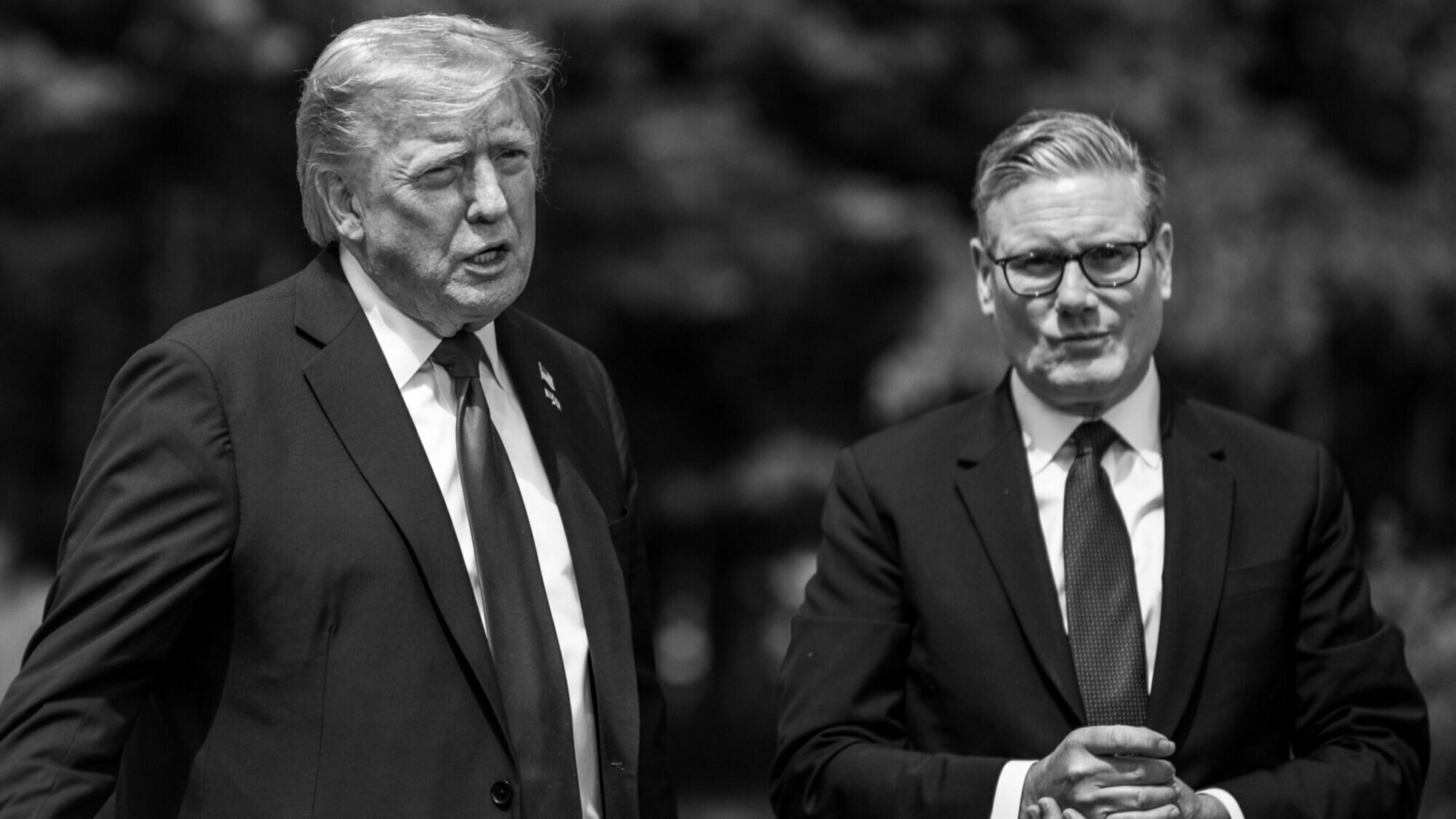
US officials told The Telegraph that they were ready to impose travel bans if Prime Minister Sir Keir Starmer follows through on threats to block X inside the United Kingdom.

One senior figure said Washington "had the right to up the ante" should Britain move to censor a US company.

The danger is a new British law that criminalizes the creation of non-consensual, sexualized AI images.

Technology Secretary Liz Kendall said she would make the offense a formal priority under the Online Safety Act, forcing platforms to demonstrate that they are curbing the spread of explicit synthetic content.

She confirmed that Ofcom, the country's communications regulator, would gain expanded powers to investigate and, if necessary, suspend access to sites that fail to comply.

Ofcom officials contacted X last week, demanding documentation by Friday showing how the firm enforces safety compliance.

The regulator warned that it could ultimately block the service if the company refuses to cooperate.

That possibility has alarmed Washington, where authorities view the threat as a direct assault on an American firm and on free expression more broadly.

"UK officials could face being barred from the US over plans to ban X," a State Department source told the paper.

The warning was reinforced by Sarah Rogers, President Donald Trump's undersecretary for public diplomacy, who said during a GB News appearance that "nothing's off the table" when it comes to defending free speech.

Rogers was unsparing in her criticism. "If the UK bans X, it won't be the first country to do so. Russia bans X. Venezuela bans X. Iran bans X. Free societies generally don't," she said.

She accused the Starmer government of using the language of online safety to disguise a political motive: "What the British government wants isn't a reasonable, safe, online, discursive environment for women or whatever it claims... What the British government wants is the ability to curate a public square to suppress political viewpoints it dislikes."

She later posted on X, calling the proposal "a Russia-style X ban," adding that "America has a full range of tools that we can use to facilitate uncensored internet access in authoritarian, closed societies where the government bans it."

Washington, particularly under Trump's leadership, has made opposition to censorship abroad a cornerstone of its tech policy.

The United States has already revoked visas from British and European figures linked to organizations that promote online content moderation, including Imran Ahmed of the Centre for Countering Digital Hate and Clare Melford of the Global Disinformation Index.

Both groups were founded or supported by allies of the Labour Party, of which Prime Minister Keir Starmer is the leader.

A source familiar with Whitehall's discussions acknowledged that a full ban on X could trigger severe diplomatic retaliation. "They were determined not to sanction any government officials, but they considered X the prize jewel to protect. If X were banned, all hell would break loose," the source said.

The transatlantic fallout has already spilled into trade. Washington suspended the "tech prosperity" cooperation agreement last month, citing Britain's censorship direction under the Online Safety Act.

Members of Congress have also joined the pushback. Republican representative Anna Paulina Luna warned that she would introduce legislation to "sanction not only Starmer, but Britain as a whole" if Labour proceeds with restrictions.

Secretary of State Marco Rubio echoed the sentiment, describing European and British moves against Musk's company as "an attack on all American tech platforms and the American people."

Asked about the escalating dispute, a State Department spokesperson declined to address specific sanctions but reiterated: "The United States will continue to take all necessary actions to protect the free speech rights of our citizens from foreign threats."
GET YOURS
2

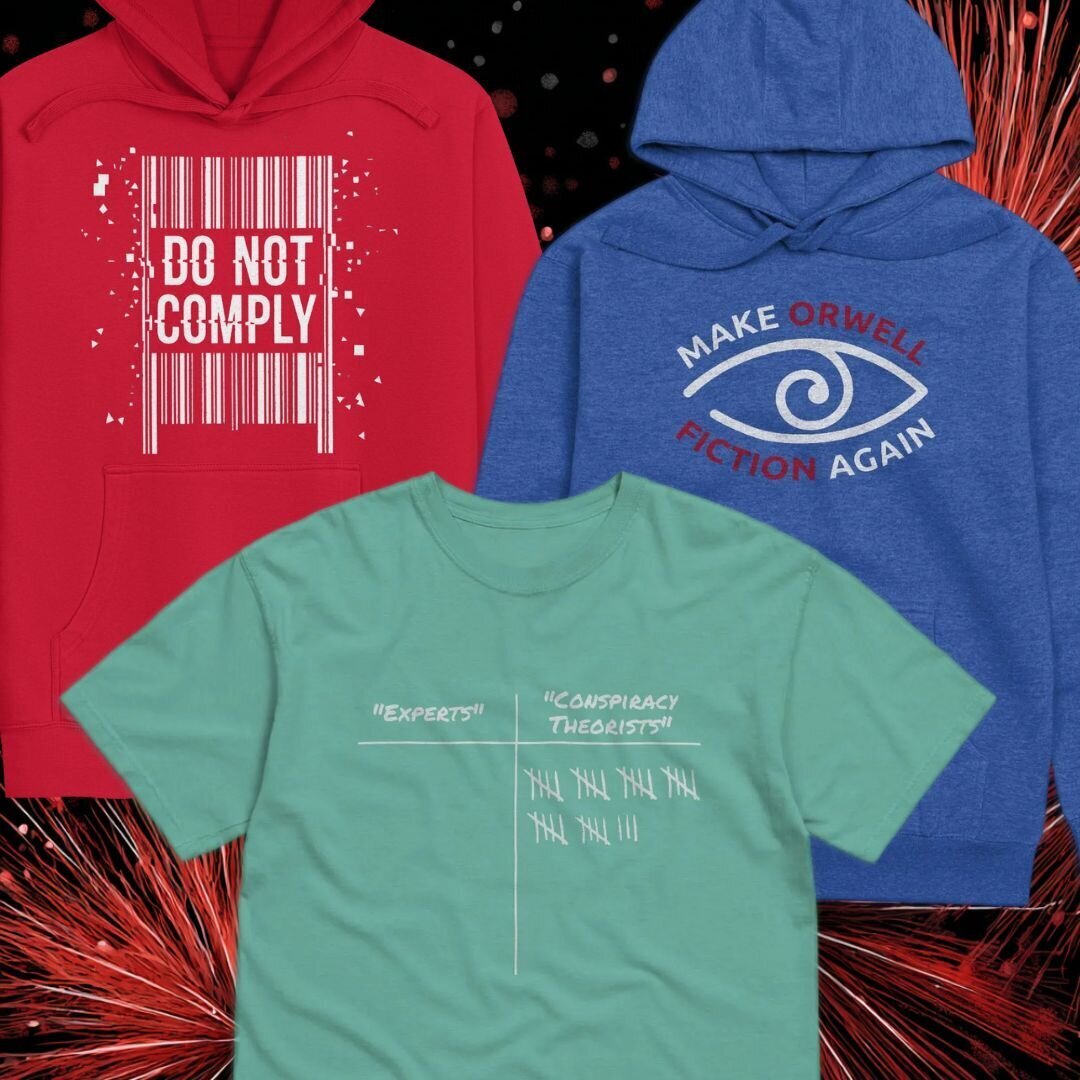
Get Yours: Shop Now

Getting merchandise for yourself or as a gift helps support the mission to defend free speech and digital privacy.

It also helps raise awareness every time you wear or use it.

Your merch purchase goes directly toward sustaining our work and growing our reach. 

It's a simple, effective way to support. Get yours now.

Shop Now
PURGED
3

No ID, No Account: Australia's Great Digital Purge

Australia's new digital ID requirement for social media users is already reshaping the country's online environment.

Meta revealed in a Medium post that it has deleted nearly 550,000 accounts that may have belonged to users under 16.

The total includes about 330,000 Instagram profiles, 173,000 Facebook accounts, and 40,000 on Threads.

The company wrote, "Ongoing compliance with the law will be a multi-layered process that we will continue to refine, though our concerns about determining age online without an industry standard remain."

The law, which took effect on December 10, requires ten major online platforms, including Facebook, Instagram, TikTok, Snapchat, Reddit, X, and Twitch, to verify users' ages using government-issued ID or face penalties of up to $49.5 million AUD ($33 million USD).

While presented as a measure to protect minors, the policy effectively establishes a digital ID system for social media participation. Users who refuse to provide identification or biometric data lose access, and their accounts, along with all photos, messages, and stored information.

Meta's large-scale removals show how the policy is changing online participation.

Many of these accounts likely belonged to people unwilling to provide ID rather than confirmed minors.

In complying with the regulation, Meta and other platforms are opting to delete accounts to avoid financial penalties.

This approach also accelerates the use of algorithmic age inference tools that rely on photos and activity patterns, despite widespread concern over their accuracy and privacy implications.

Some companies are fighting back. Reddit has filed a lawsuit against the Australian government, asserting that it should not be classified as a social media platform.

The company said the regulation "comes with some serious privacy and political expression issues." The case could determine how broadly digital identification laws can be applied to online discussion spaces.

Meta has expressed reservations about the policy even while enforcing it.

The company argued that cutting teenagers off from major online spaces can isolate them from support networks and push them toward "less regulated parts of the internet."

It also criticized the lack of consistent verification methods and noted that both parents and teenagers have shown little willingness to comply.

The deletion of hundreds of thousands of accounts in such a short period highlights how rapidly a government mandate can reshape online behavior. It also shows how easily access to years of personal data can vanish once identification becomes a prerequisite for participation.

Proponents call the measure a safety initiative, but it introduces a system of traceable digital identity that could redefine the boundaries of online speech and privacy.

By linking access to verified identity, the policy transforms social media into a controlled environment where anonymity and open discourse are harder to maintain.
Reclaim The Net is funded by the community. Keep us going and get extra benefits by becoming a supporter today. Thank you.

Become a Supporter
Thanks for reading,

Reclaim The Net


86-90 Paul Street
London
London
EC2A 4NE
United Kingdom

No comments:

Post a Comment